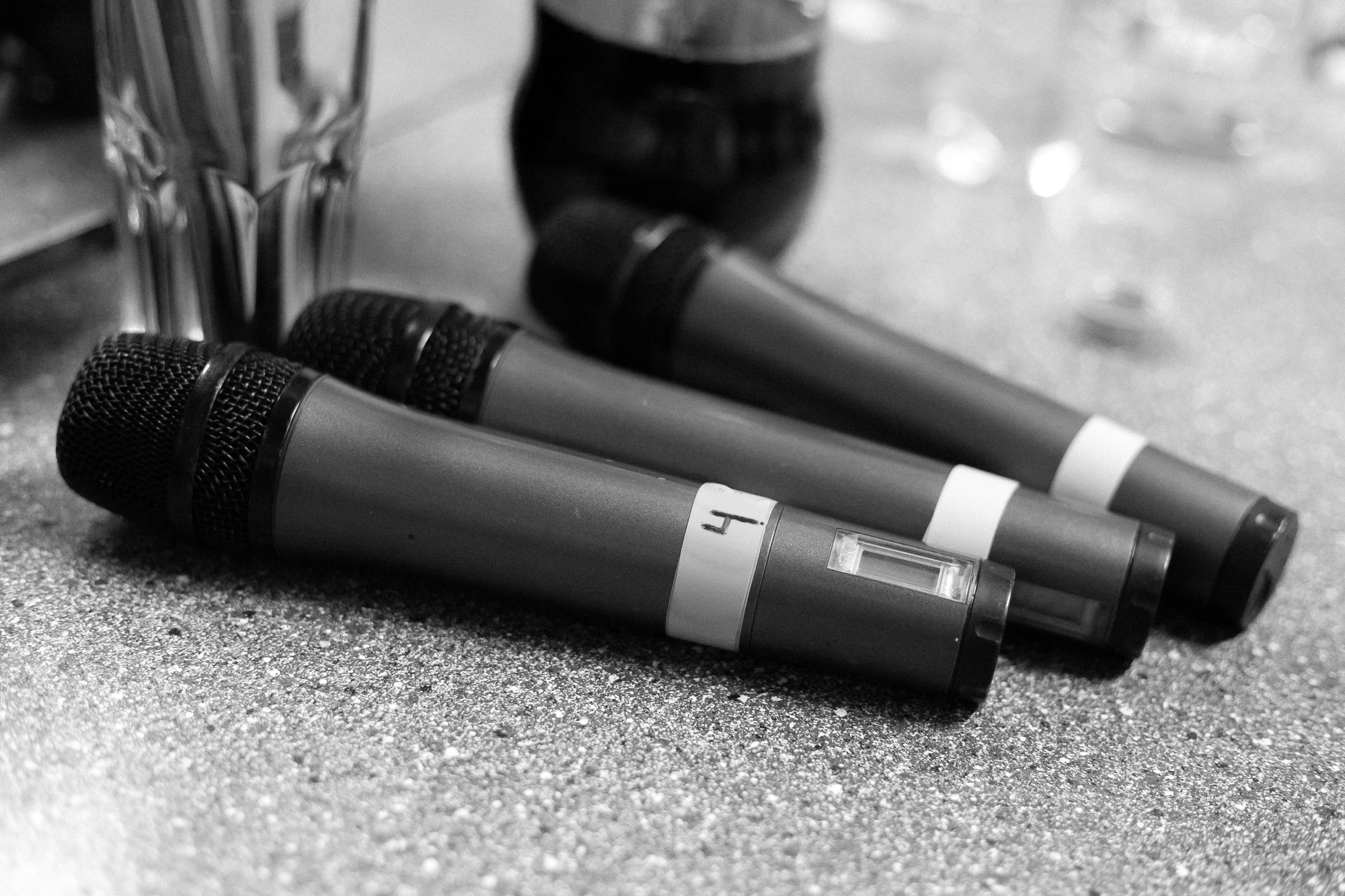
6 Best Vocal Microphones Under 100 Dollars In 2025
You do not need an expensive microphone to record good vocals. The budget end of the microphone market has improved dramatically over the past few years, and several mics that sit well below the hundred-dollar mark now deliver results that would have required far more expensive gear a decade ago.
The catch is that at this price point, every mic makes trade-offs. Some sacrifice detail for durability. Others capture studio-quality nuance but fall apart if you look at them wrong. This guide helps you pick the right trade-off for how you actually plan to use it — whether that is recording in a bedroom, performing live, podcasting, or streaming.
Quick Comparison
| Microphone | Type | Best For | Polar Pattern | Connection |
|---|---|---|---|---|
| Shure SM58 | Dynamic | Overall best, live vocals | Cardioid | XLR |
| Audio-Technica AT2020 | Condenser | Studio vocal recording | Cardioid | XLR |
| Sennheiser e835 | Dynamic | Bright vocals, live clarity | Cardioid | XLR |
| Behringer XM8500 | Dynamic | Tightest budget | Cardioid | XLR |
| Fifine K669B | Condenser | USB plug-and-play | Cardioid | USB |
| Marantz Pro MPM-1000 | Condenser | Versatile studio recording | Cardioid | XLR |
Dynamic vs Condenser — Which Type Do You Need?
Before looking at specific models, you need to understand the fundamental choice: dynamic or condenser. This matters more than brand names, especially on a budget.
Dynamic microphones use a simple diaphragm-and-coil mechanism. They are tough, handle loud sound sources without distortion, reject background noise well, and do not require phantom power. The trade-off is lower sensitivity — they capture less fine detail than condensers.
Condenser microphones use a thin, electrically charged diaphragm that responds to subtler nuances in your voice. They capture more detail, have a wider frequency response, and generally sound more “open.” The trade-off is that they pick up more room noise, require 48V phantom power from an audio interface, and are physically more fragile.
The practical rule: If your recording space is untreated (no acoustic panels, in a regular room with hard walls), a dynamic mic will usually give you a cleaner result because it rejects the room reflections that condensers pick up. If you have even basic acoustic treatment — a few foam panels or a reflection filter — a condenser will capture more vocal detail.
For live performance, dynamic wins every time. No contest.
The 6 Best Vocal Mics Under 100 Dollars
1. Shure SM58 — Best Overall
The SM58 is the most widely used vocal microphone in the world, and that reputation is earned. It has been the industry standard for live vocals since the 1960s, and it works just as well in a home studio for tracking vocals, podcasts, and voiceovers.
Why it stands out:
- The internal pneumatic shock mount system reduces handling noise significantly — you can hold it while singing without rumble bleeding into the recording
- The built-in spherical wind and pop filter (that steel mesh grille) is effective enough that you may not need an external pop filter for most vocal styles
- The cardioid pattern has a tight pickup, rejecting off-axis sound well, which means less room noise in untreated spaces
- Practically indestructible — there are documented cases of SM58s surviving being run over by tour buses and still working
What to know: The SM58 has a presence peak in the upper midrange (around 5-10kHz) that adds clarity and cut to vocals, particularly in a live mix. In a studio context, some vocalists find this brightness harsh on sibilant sounds. If that is you, a de-esser plugin in your DAW fixes it easily.
The frequency response runs from 50Hz to 15kHz. That low-end rolloff is intentional — it reduces proximity effect boom and stage rumble. For vocals, this is a feature, not a limitation.
You will need an XLR cable and either a mixer or an audio interface to use it. The SM58 is a low-impedance (150 ohm) dynamic mic, so any budget interface will power it without issues.
2. Audio-Technica AT2020 — Best Condenser for the Money
If you want a condenser microphone without breaking the budget, the AT2020 is the one to get. It is one of the most recommended entry-level large-diaphragm condensers among home recording forums and production communities, and for good reason — it punches well above its weight class.
Why it stands out:
- Wide, flat frequency response (20Hz-20kHz) captures the full range of a human voice with accuracy
- Low self-noise (20dB SPL) means the mic itself introduces minimal hiss into quiet recordings
- The custom-engineered low-mass diaphragm handles transients well, giving vocals a natural, open quality
- Rugged build for a condenser — the all-metal body is more durable than most budget condensers
What to know: The AT2020 requires 48V phantom power, so you need an audio interface that provides it (most do). It also picks up room reflections more than a dynamic mic, so some basic acoustic treatment helps. Even hanging a thick blanket behind you while recording makes a difference.
There is also a USB version (AT2020USB+) if you do not want to deal with an interface, though the XLR version gives you more flexibility and slightly better audio quality through a dedicated preamp.
Audio-Technica has a solid track record with condenser microphones. If you eventually move up to their higher-end models like the AT4040 or AT4050, you will already be familiar with their house sound.
3. Sennheiser e835 — Best for Bright, Cutting Vocals
The e835 is Sennheiser’s answer to the SM58, and in some ways it outperforms it. Where the SM58 has a broad presence boost, the e835 has a more focused upper-midrange lift that gives vocals a forward, articulate quality — particularly useful for singers who need to cut through a loud band mix.
Why it stands out:
- The uniform frequency pickup pattern minimizes proximity effect, so your bass response stays consistent whether you are right on the mic or a few inches away
- Excellent feedback rejection — the tight cardioid pattern makes it a strong choice for stage monitors
- Rugged metal construction with Sennheiser’s hum-compensating coil that reduces electromagnetic interference
- Comes with a carrying pouch for transport
What to know: The e835 has slightly less low-end warmth than the SM58. Some vocalists prefer this clarity; others miss the body. If you sing genres where a warm, thick vocal tone matters (R&B, jazz), the SM58 may suit you better. For rock, pop, and anything where vocal presence and articulation matter, the e835 is excellent.
Like the SM58, it is a dynamic cardioid mic that needs an XLR connection but no phantom power.
4. Behringer XM8500 — Best on a Tight Budget
The XM8500 is the mic that gets recommended in every “I have almost no money but want to start recording” thread on forums and Reddit. It is a Shure SM58 clone at a fraction of the cost, and while it does not match the SM58’s build quality or durability, the sound quality gap is much smaller than the price gap.
Why it stands out:
- Genuinely good sound quality for the price — warm midrange, reasonable clarity, usable for both recording and live work
- Comes with an XLR cable, mic clip, and carrying pouch
- Internal shock mount system for handling noise reduction
- Mid-frequency presence peak similar to the SM58’s voicing
What to know: The build quality is the main sacrifice. The XM8500 is lighter and feels less solid than the SM58 or e835. The grille can dent more easily, and the internal components are less robust over time. If you are gigging regularly or touring, spend more. If you are recording at home and the mic sits on a stand, the XM8500 is a smart budget move that frees up money for acoustic treatment or a decent audio interface.
5. Fifine K669B — Best USB Mic for Simplicity
Not everyone wants to deal with XLR cables, audio interfaces, and phantom power. If you want to plug a mic into your computer and start recording immediately, the Fifine K669B is a strong option. It is a USB condenser mic designed for podcasting, streaming, and vocal recording with zero additional gear required.
Why it stands out:
- True plug-and-play — recognized by Windows, Mac, and most Linux systems without driver installation
- Includes an adjustable desktop tripod stand
- The volume knob on the mic body lets you control gain without touching software
- Compact and portable — easy to throw in a bag for mobile recording
What to know: USB mics have a built-in analog-to-digital converter, so the audio quality depends partly on the quality of that internal chip. The K669B is decent but not on par with what you would get running an XLR condenser through a quality audio interface. For serious vocal production, the XLR route gives you better results. For podcasts, streams, voiceovers, and demo recordings, the K669B is perfectly adequate.
The cardioid pattern is reasonably tight, but like any condenser, it will pick up room noise more than a dynamic mic. Record in the quietest space you can find.
6. Marantz Pro MPM-1000 — Best Versatile Condenser
The MPM-1000 is a large-diaphragm condenser that ships with useful accessories right in the box: a shock mount, desktop stand, and XLR cable. If you want an XLR condenser but do not want to buy accessories separately, this is a convenient package.
Why it stands out:
- Frequency response of 20Hz to 20kHz — the full audible spectrum, which is uncommon at this price point
- Low self-noise makes it suitable for quiet vocal passages and spoken word
- Ships with a shock mount (most budget mics do not include one)
- Handles high SPL (136dB) well, so it works for loud singers and even instrument close-miking
What to know: The MPM-1000 requires 48V phantom power. Its output is on the lower side for a condenser, so your audio interface preamp needs adequate gain. Budget interfaces like the Behringer UMC202HD handle this fine, but if your interface has weak preamps, you may end up with higher noise floors.
The included desktop stand works for podcasting but is too short for standing vocal sessions. Plan on a proper boom arm or floor stand for recording vocals in a typical setup.
What to Look for When Buying a Budget Vocal Mic
Polar Pattern
Every mic on this list uses a cardioid polar pattern, and for vocals, that is almost always what you want. Cardioid mics pick up sound primarily from the front and reject sound from the sides and rear. This means less room noise, less bleed from other instruments, and better feedback rejection on stage.
Omnidirectional mics have their uses (recording a room, capturing ambiance), but for isolated vocal recording, cardioid is the default choice. For more on polar patterns and how they affect recordings, the Audio Engineering Society has published extensively on the topic.
Frequency Response
The human voice ranges from roughly 85Hz to 8kHz in fundamental frequencies, with harmonics and overtones extending above 12kHz. A mic with a 50Hz-15kHz response (like the SM58) captures everything you need for vocals. A wider range (20Hz-20kHz, like the AT2020 or MPM-1000) captures more detail in both extremes.
Wide frequency response matters more for condenser mics used in studio recording, where you want to capture breaths, subtle sibilance, and high-frequency “air.” For live vocals through a PA system, the narrower dynamic mic response is actually an advantage — it naturally filters out frequencies that cause rumble and feedback.
Self-Noise
Every microphone generates some amount of noise just by existing. For dynamic mics, self-noise is essentially zero because they generate signal from physical movement of the diaphragm. Condenser mics have active electronics that introduce a noise floor, measured in dB SPL.
For vocals, aim for self-noise under 20dB SPL. Both the AT2020 and MPM-1000 hit this mark. Higher self-noise becomes audible during quiet passages and can be difficult to remove in post without also degrading the vocal quality.
Build Quality
Budget mics vary wildly in construction. An all-metal body (zinc alloy or aluminum) will survive drops, travel, and regular use. Plastic bodies crack. Metal grilles protect the capsule; mesh grilles can dent.
If the mic will live on a stand in your home studio and never move, build quality matters less. If you plan to gig with it, carry it around, or hand it to other people, invest in something built to last. The SM58 and e835 are industry-standard touring mics for a reason.
XLR vs USB
XLR mics connect to audio interfaces, mixers, or PA systems. They offer better audio quality, more control over your signal chain, and work in any professional context. The trade-off is additional gear: you need at least an audio interface and an XLR cable.
USB mics plug directly into your computer. They are convenient, portable, and cheaper overall (no interface needed). The trade-off is a fixed signal chain — you cannot upgrade the preamp or converter independently. USB mics also cannot be used with mixers, PA systems, or any non-computer setup.
For vocal recording that you intend to mix and release, XLR is the better long-term investment. For podcasting, streaming, or quick demos, USB works fine.
Accessories You Will Actually Need
A microphone alone is not enough to start recording. Here is what else you need, depending on your mic type:
For XLR mics (SM58, AT2020, e835, XM8500, MPM-1000):
- An audio interface with at least one XLR input and 48V phantom power (required for condensers)
- A quality XLR cable — do not cheap out here, bad cables introduce noise
- A mic stand (boom arm for desktop recording, floor stand for standing)
- A pop filter for plosive control, especially with condenser mics
For USB mics (K669B):
- A pop filter (foam windscreen or nylon pop filter)
- Optionally, a better desktop stand or boom arm than the included tripod
For everyone:
- Headphones for monitoring (closed-back to prevent bleed into the mic) — check our guide on studio headphones for options
- Basic acoustic treatment: even a closet full of clothes or a thick blanket behind you dramatically improves vocal recordings
Common Mistakes to Avoid
Buying a condenser for an untreated room. This is the most common mistake beginners make. A condenser mic in a reflective room will capture every flutter echo, air conditioning hum, and keyboard click. If you cannot treat your space, a dynamic mic like the SM58 or e835 will give you cleaner results with less effort.
Ignoring the signal chain. A great mic plugged into a terrible interface sounds worse than a decent mic through a good interface. Budget your gear purchases as a system, not as individual pieces.
Expecting studio results without monitoring. You need closed-back headphones to hear what the mic is actually capturing. Recording without monitoring means you will not catch problems until you are editing — by which point it is too late.
Singing too far from the mic. Dynamic mics especially need you close — within 2-6 inches. Backing away drops your signal level and increases the ratio of room noise. For condenser mics, 6-12 inches is typically the sweet spot.
Frequently Asked Questions
Can I record professional-sounding vocals with a mic under 100 dollars?
Yes, with caveats. The microphone is one part of the chain. A well-recorded vocal through an SM58 or AT2020 into a decent interface, in a treated room, will sound better than an expensive mic in a bad room with a noisy interface. Many professional records — especially in hip hop and rock — have been tracked on SM58s.
Do I need phantom power for a dynamic mic?
No. Dynamic mics generate their signal from physical diaphragm movement and do not need external power. Phantom power (48V) is only required for condenser mics. Sending phantom power to a dynamic mic will not damage it, but it is unnecessary.
Is USB or XLR better for vocal recording?
XLR gives you better audio quality and more flexibility in the long run. USB is more convenient and costs less upfront (no interface needed). If you think you will take recording seriously, start with XLR. If you are experimenting or primarily podcasting/streaming, USB is fine.
What is the single best budget vocal mic if I can only buy one?
The Shure SM58. It works for live vocals, studio recording, podcasts, voiceovers, and even instrument miking in a pinch. It is nearly indestructible, works with any audio setup, and its sound quality is proven across decades of professional use. It is the safest first microphone purchase you can make.
Conclusion
At this price point, you are not looking for the “perfect” mic — you are looking for the right compromise. The Shure SM58 remains the safest all-around choice: it handles live and studio use, sounds good on almost any voice, and will survive years of regular use.
If studio recording with maximum vocal detail is your priority and you have an audio interface with phantom power, the Audio-Technica AT2020 is the better pick. If budget is the primary concern, the Behringer XM8500 gets you surprisingly close to SM58 quality for significantly less money.
Whatever you choose, remember that the mic is only one link in the chain. A good XLR cable, a capable interface, and basic room treatment will do more for your recordings than spending extra on the microphone itself.